NUTRALYS® Pea Protein and NUTRALYS® S85 Plus: A Range of High Nutritional Quality Pea Protein with Characteristic Digestion Profiles
Published January 20, 2026
The objective of the present research was to investigate the nutritional quality and the kinetic of digestion of NUTRALYS® pea protein and NUTRALYS® S85 Plus.

|
|
Authors
- L. Guérin-Deremaux - Roquette Frères, Lestrem, France
- C. Perreau - Roquette Frères, Lestrem, France
- C. Lefranc-Millot - Roquette Frères, Lestrem, France
- J. Sharma - Roquette Frères, Lestrem, France
- S. De Jong – NIZO Food Research, The Netherlands
Study Objectives
Methods
Protein digestibility

| Growing rats n=10/group |

| Control period followed by 5-day balance period |
| Diet providing 10% of proteins or no protein |

| Endpoints: Nitrogen intake & Fecal nitrogen |
PDCAAS evaluation



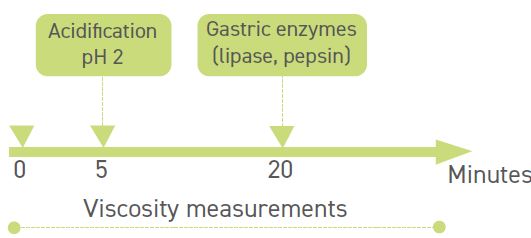
Kinetic of digestion
- “NIZO SIMPHYD model”
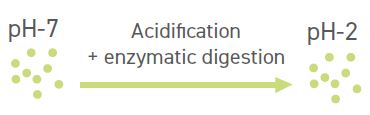
- Static model simulating the gastric digestion combined with in-line viscosity measurements
Results
Protein digestibility & PDCAAS
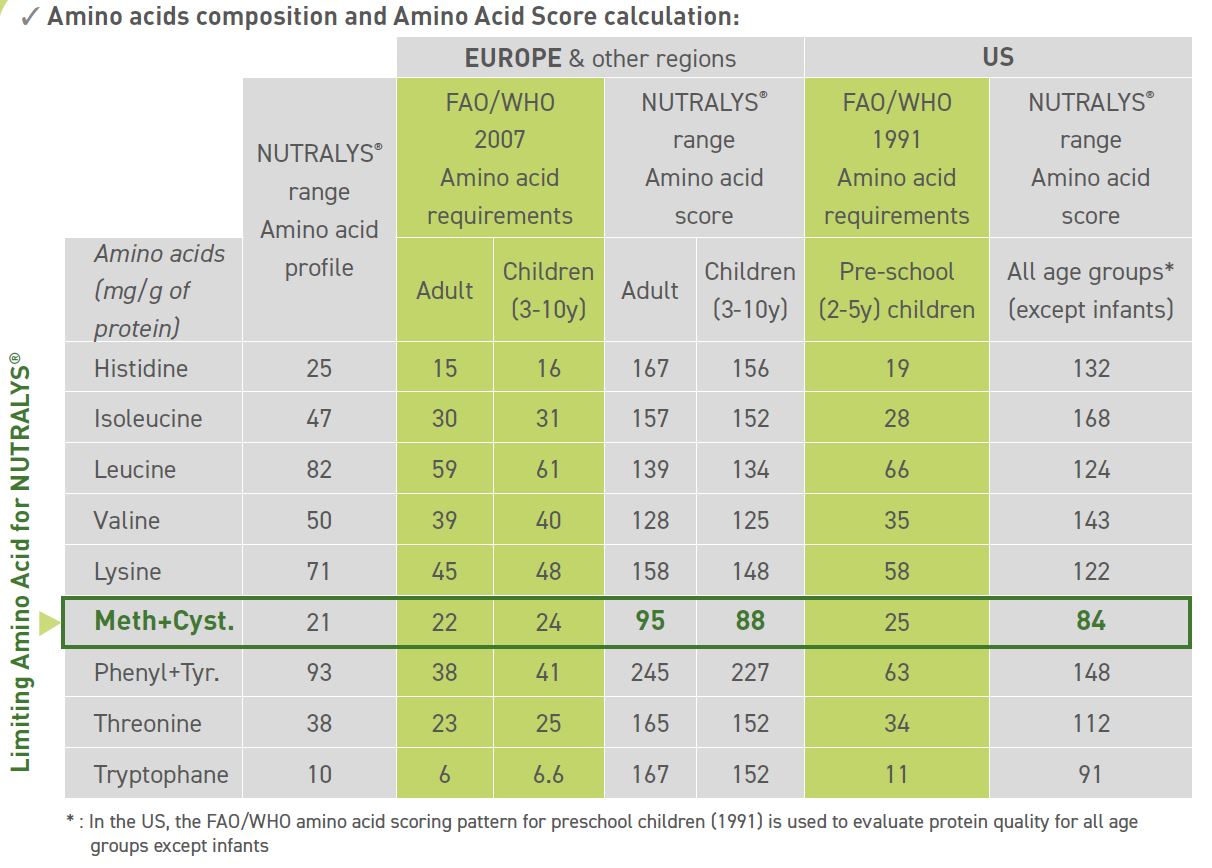
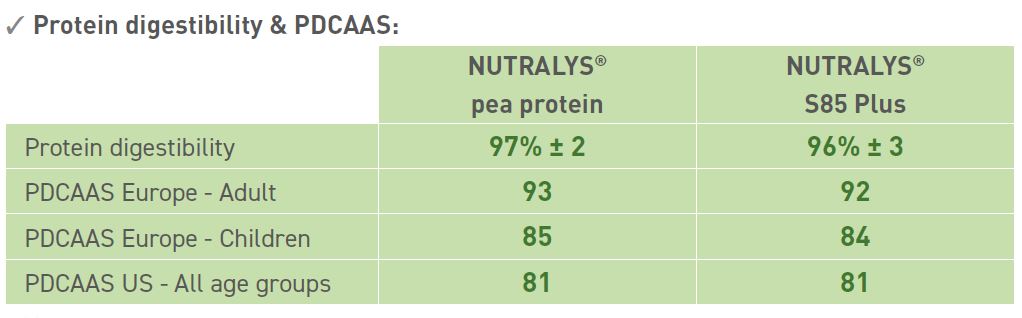
The NUTRALYS® range of pea proteins is a great source of highly digestible proteins with almost full amino acid profile opening the opportunity to good synergies with cereal-based proteins.
For example, when using the 2007 amino acid requirements, a ration of 85% NUTRALYS® pea protein/15% wheat gluten allows to reach an amino acid score over 100.
Kinetic of digestion
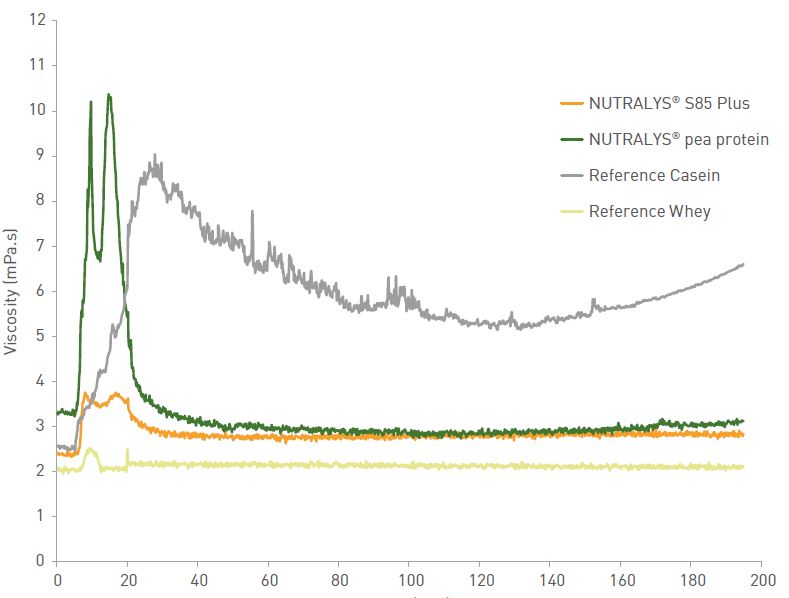
NUTRALYS® S85 Plus & Whey:
“Fast protein” |
|
NUTRALYS® pea protein: Increase in viscosity during the gastric acidification and sudden drop in viscosity after addition of the gastric enzymes, suggesting the aggregation into particles “Intermediate-fast protein” |

|
Casein: High and sustained increase in viscosity, suggesting the formation of an enduring protein network
“Slow Protein” |

|

| The fast or intermediate-fat proteins could facilitate rapid amino acid delivery to the bloodstream and may be of potential interest for muscle protein synthesis during the recovery phase. |
Conclusion
The 2 pea proteins isolates evaluated in these studies displayed a high nutritional quality profile. NUTRALYS® pea protein is an “intermediate-fast protein” and NUTRALYS® S85 Plus is a “fast-digested protein” making these ingredients adapted to specific nutritional needs. These results show that plant-based proteins, like those of the NUTRALYS® range, may allow designing high quality protein rich foods and beverages
LIST OF REFERENCES
Yang et al., 2012, Agro Food Ind Hi Tech; Overduin et al., 2015, Food Nutr Res
DISCLAIMER
The information contained in this document is to the best of our knowledge true and accurate, but all instructions, recommendations or suggestions are made without guarantee. Since the conditions of use are beyond our control, we disclaim any liability for loss and/or damage suffered from use of these data or suggestions. Furthermore, no liability is accepted if use of any product in accordance with these data or suggestions infringes any patent. No part of this document may be reproduced by any process without our prior written permission.
© Roquette Frères S.A. 11/2020