The Health Benefits of NUTRALYS® Pea Protein in Healthy Volunteers
Published January 16, 2026
Investigation on various benefits of NUTRALYS® pea protein: satiating properties in healthy volunteers, impact on muscle mass development in sportsmen, hedonic adherence of elderly people to a diet while incorporating NUTRALYS® pea protein.


Authors
- L. Guérin-Deremaux - Roquette Frères, Lestrem, France
- N. Babault - Centre d’expertise de la Performance, UFR STAPS Dijon, France,
- R. Re - Leatherhead Food Research, UK
- S. Pompo - Leatherhead Food Research, UK
- C. Lefranc-Millot - Roquette Frères, Lestrem, France
- J. Sharma - Roquette Frères, Lestrem, France
- F. A. Allaert – CEN Nutriment, France
This study demonstrates that NUTRALYS® pea protein is a powerful alternative to animal proteins cumulating positive attributes and offering the best of plant-based nutrition to meet specific needs at different steps of life.
Study Objectives
| The nutrient requirements during the different stages of the human lifecycle vary considerably. Adults wishing to control their caloric intake, sportsmen wishing to develop their muscle mass or older adults wishing to keep pleasure when eating, all have different nutritional and metabolic needs. ROQUETTE has developed a range of vegetable proteins produced from yellow pea. NUTRALYS® pea protein is a great source of proteins both qualitatively and quantitatively, rich in Branched Chain Amino Acids and Arginine. The objectives of the present research were to investigate various benefits of NUTRALYS® pea protein: ✓ the satiating properties in healthy volunteers, ✓ the impact on muscle mass development in sportsmen, ✓ the hedonic adherence of elderly people to a diet while incorporating NUTRALYS® pea protein. |
Methods
Energy intake control

| Healthy volunteers n=33/group |

| 1 day |
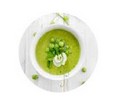
| Isocaloric Soup at 11:00am with:
|

| Energy intake at a subsequent ad libitum lunch (02:00pm) |
Muscle mass development

| Sportsmen practicing moderate or occasional sport n=53 to 53/group |
|
|
|
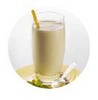
| Isocaloric Beverage twice a day with:
|

| Biceps brachii thickness evolution by ultrasonography |
Pleasure of eating
|
| Elderly volunteers living in nursing homes n=24 |
|
| 3 weeks |
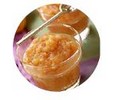
| Apple compote every 2 days:
|

| Hedonic satisfaction evolution by questionnaires |
RESULTS
Energy intake control
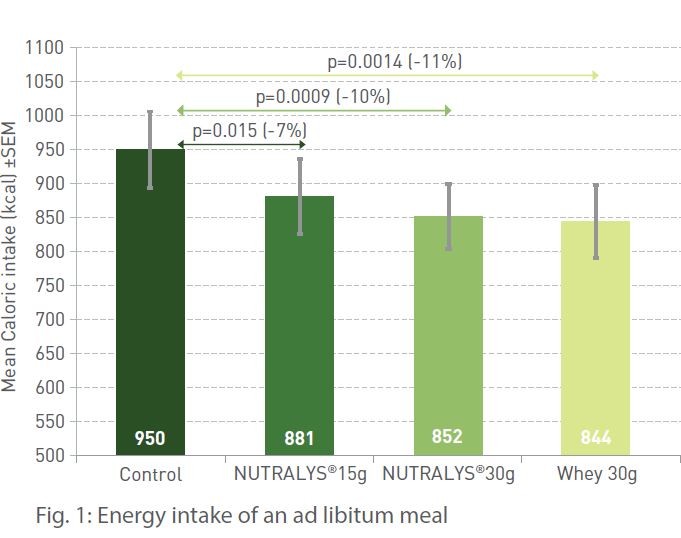
- Significantly lower energy intake in the NUTRALYS® pea protein and whey protein-containing soups vs. control
- Nos differences between the proteins groups
Muscle mass development
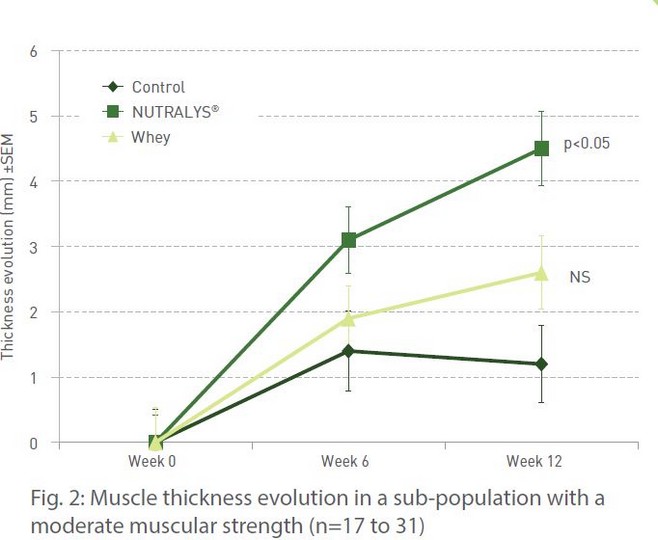
- Significantly higher muscle thickness in the NUTRALYS® pea protein group vs. control
- No differences between they whey group vs. the 2 other groups
Pleasure of eating
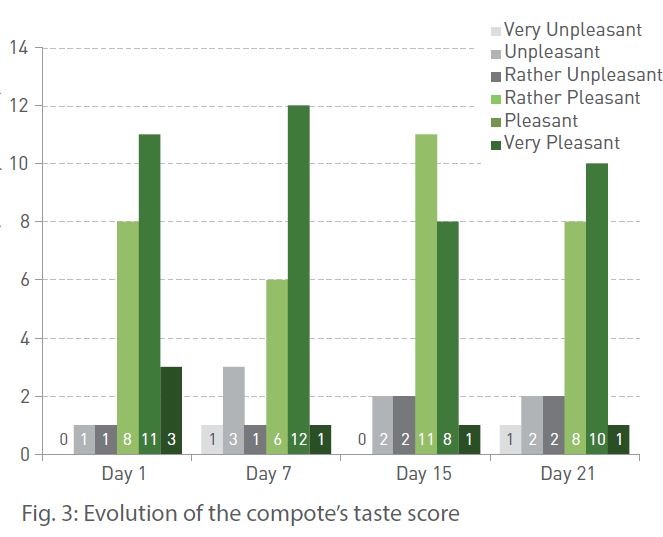
- “Rather pleasant” to “Very pleasant” evaluation by more than a fifth of the volunteers
- Nos significant evolution over the study period

CONCLUSION
NUTRALYS® pea protein is a promising ingredient:
- for supporting the efforts of people concerned with their caloric intake,
- for optimizing muscle mass development in people starting or returning to a muscular sport, in addition to an appropriate training,
- for elderly population, from an organoleptic point of view, to design high-protein foods.
These results demonstrate that NUTRALYS® pea protein is a powerful alternative to animal proteins cumulating positive attributes and offering the best of plant-based nutrition to meet specific needs at different steps of life.
LIST OF REFERENCES
Babault et al., 2015, J Int Soc Sports Nutr; Allaert et al., 2016, Aging Clin Exp Res; Re et al., 2016, J Nutrition Health Food Sci
DISCLAIMER
The information contained in this document is to the best of our knowledge true and accurate, but all instructions, recommendations or suggestions are made without guarantee. Since the conditions of use are beyond our control, we disclaim any liability for loss and/or damage suffered from use of these data or suggestions. Furthermore, no liability is accepted if use of any product in accordance with these data or suggestions infringes any patent. No part of this document may be reproduced by any process without our prior written permission. © Roquette Frères S.A. - Vitafoods Europe - 05/2019 - Switzerland