March 2026 Update on the EU Industry Market
Published March 30, 2026
As we move into the second quarter of 2026, the European industry is navigating a landscape shaped by continued geopolitical tensions and significant market volatility.

March 2026 Update on the European starch & derivatives Industry by Roquette Market Analysts
As we move into the second quarter of 2026, the European industry is navigating a landscape shaped by continued geopolitical tensions and significant market volatility. The latest analysis from Roquette Market Analysts provides a comprehensive overview of how ongoing conflicts, particularly in the Middle East, are influencing commodity dynamics, macroeconomic projections, and industry trends.
Commodity Market Developments
Energy Sector: Price Surge Amid Middle East Instability
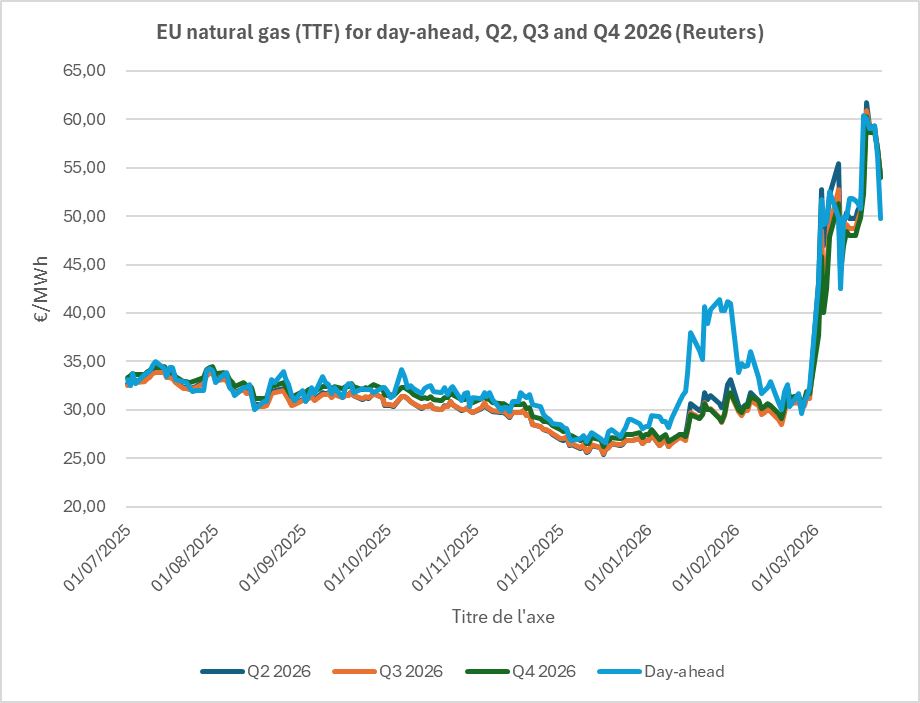
Energy markets are reacting sharply to instability in the Middle East. Disruptions in critical shipping routes, particularly through the Strait of Hormuz, and attacks on energy infrastructure have led to increased volatility and driven both oil and gas prices higher. Recent damage to liquefied natural gas facilities in Qatar is negatively impacting the global LNG supply not only in the short term but also in the longer term. This upward trend in energy prices has had a direct effect on power markets, notably in Italy and Germany, where year-ahead power forward prices have risen markedly. Power prices are expected to continue tracking gas price developments closely, with market sentiment highly sensitive to geopolitical announcements and policy changes.
Grains Sector: Persistent Pressures and Increased Volatility
The grains market continues to experience heightened volatility. The cereal complex, including key commodities such as wheat and corn, remains under pressure due to uncertainty at the onset of the weather market. Despite fundamentals that would typically support stability, external influences—most notably the Middle East conflict—are having an outsized impact on energy and fertilizer markets, which could negatively affect the next crop.
Freight Sector: Security Concerns and Rising Costs
The security situation in major maritime corridors has deteriorated, causing significant disruptions. Uncertainty surrounding shipping traffic in the Strait of Hormuz, in particular, has led to increased freight costs and affected global supply chains. Additionally, Rising Oil Prices Pushed Domestic Freight Costs Even Higher, Intensifying Existing Logistics Pressures.
Macroeconomic Conditions
Economic Outlook : Geopolitical Risks Impacting 2026 Projections
The broader macroeconomic environment has turned markedly more fragile as a direct result of revived geopolitical tensions. The ongoing war in the Middle East has amplified uncertainty, pushing up energy prices and undermining both consumer and business confidence. Short-term economic growth projections (European Centrale Bank March 2026) have been revised downward, with inflation expected to climb as energy-driven price pressures ripple through the broader economy. This higher inflation is expected to dampen household purchasing power, weaken consumer spending, and exert downward pressure on GDP (Gross Domestic Product) growth for the remainder of 2026.
Starch Industry Trends
Starch and Derivatives: Moderate Demand Growth Reflects Broader Market Dynamics
Within the starch and starch derivatives market, we expect demand to exhibit a moderate rise that closely mirrors broader industry trends. This tempered growth reflects the overall caution present in the market as a result of ongoing volatility in commodity prices. As the Middle East crisis fuels slower growth and higher inflation, the resulting squeeze on household budgets and business activity is set to dampen demand for starch and starch derivatives. The industry continues to monitor developments closely, seeking to adapt to a rapidly changing macroeconomic and geopolitical environment.
Conclusion
The European industry landscape in March 2026 is characterized by heightened volatility and uncertainty across commodities, energy, freight, and macroeconomic indicators. Roquette Market Analysts continue to monitor these developments closely, providing actionable insights to help stakeholders navigate a complex and rapidly evolving market environment.
To help industries transition toward more sustainable and resilient solutions, Roquette provides plant‑based alternatives to petro‑based materials.